
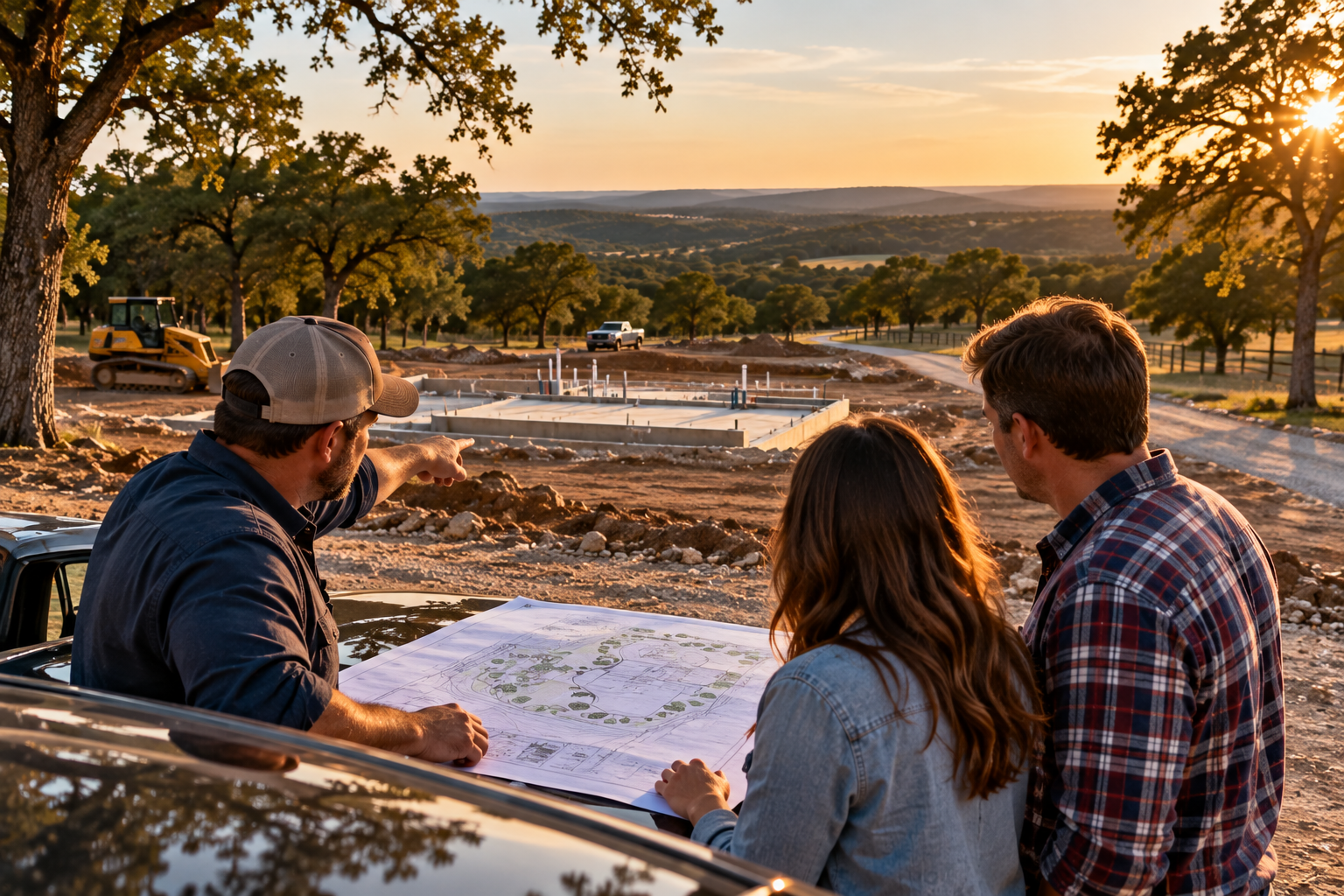
Family land can come with something a typical building lot cannot: history. Maybe it has been in the family for decades. Maybe several relatives already use the property. Maybe you finally have a chance to build your own place there.
Before choosing paint colors or debating porch sizes, there is a more important conversation to have. Where should the house go, and how will the property support it?
For build-on-your-lot shell homes in East Texas, these early site decisions can shape construction, costs, access, and how well the home fits the land.
- Choose the Homesite Carefully
The first decision is where the house will actually sit. Look at slope, drainage, existing trees, access, views, setbacks, easements, and the location of future improvements.
The prettiest spot is not automatically the best building spot. A location that works with the property’s natural conditions can make construction and long-term maintenance more practical.
- Plan the Driveway and Construction Access
Your future driveway needs to serve more than the family car. Construction crews, concrete trucks, material deliveries, and equipment need reliable access to the building site.
Consider the route from the public road, turning space, grade, drainage, and whether the driveway will remain useful after construction is complete.
- Decide How Utilities Will Reach the Home
Determine early how electricity, water, wastewater, and other services will reach the homesite. Rural family property may require a private well or other water arrangement, while some locations have access to public utilities.
The farther the house sits from existing service connections, the more important utility planning becomes.
- Settle Septic Planning Early
If the property will use an on-site sewage facility, do not leave septic planning until after the house location is finalized.
TCEQ states that OSSFs must be based on a site evaluation, and most require an approved plan and permit before construction. The evaluation considers local site conditions and helps determine which type of system is suitable. Local permitting authorities can also have additional requirements.
That means the home, septic area, driveway, and other improvements need to be considered together.
- Understand How Water Moves Across the Property
Texas rain can put a site plan to the test. Look for low areas, natural drainage paths, areas that stay wet, and places where runoff could affect the home or driveway.
A good site plan works with drainage instead of asking the property to behave differently after construction.
- Match the Foundation to the Site
Foundation selection should account for the actual property conditions, not simply personal preference. Soil, slope, drainage, elevation, and the home’s design can all influence the appropriate approach.
Depending on the property, options may include a slab, pier and beam, or pilings. Discuss the foundation with qualified professionals before finalizing the building plan.
- Think About What the Property Becomes Later
Family land rarely stays exactly the same forever. Maybe another home will eventually be added. Perhaps you want a workshop, barn, guest space, garden, or additional driveway.
Leave room for those possibilities when choosing the homesite and planning utilities. TCEQ also advises documenting decisions and locations for septic work rather than designing as construction progresses.
Start With a Site Plan That Makes Sense
Image Filename: custom-shell-home-by-Dillon-Shell-Homes
Image Alt Text: Custom shell home built by Dillon Shell Homes on Texas family-owned property.
Image Caption: A well-planned shell home brings the building site, foundation, access, utilities, and future property plans together from the start.
At Dillon Shell Homes, we help Texas property owners turn land they already own into practical custom shell homes. As experienced acreage shell home builders in East Texas, we understand that the house is only one part of the project. The property itself has to work with the plan.
Ready to build on your family land? Request a quote today.