
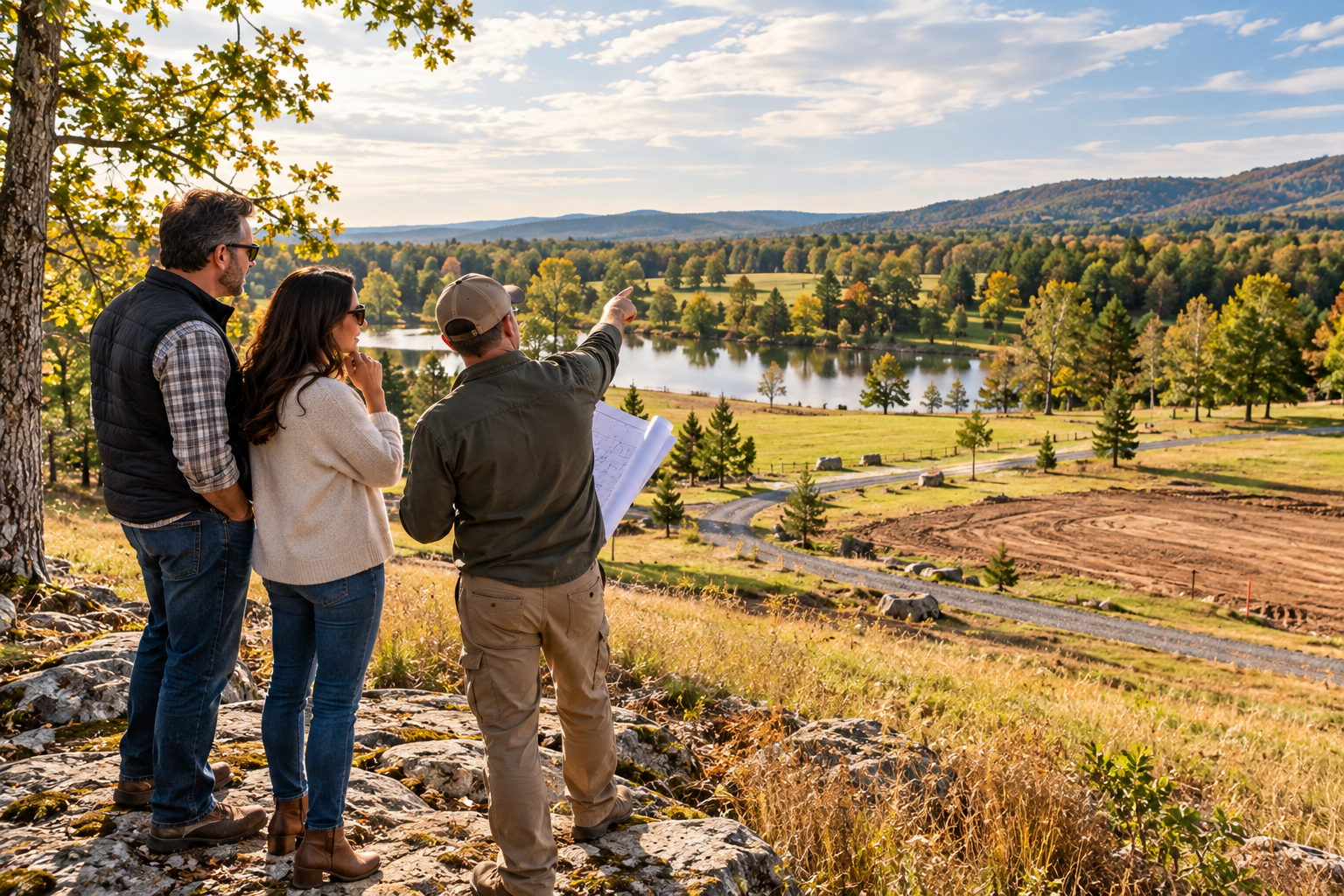
Acreage gives you room to choose. That sounds simple until you are standing on several acres wondering where, exactly, the house should go.
The highest point may offer the best view. The wooded area may feel more private. The open section may make construction easier. Then there is the driveway, septic system, utilities, drainage, future barn, and the possibility that your plans for the property will change.
The best homesite brings those pieces together. Let’s look closer.
Start With the Land Beneath Your Feet
Terrain and soil should have a say in where the house goes. Texas A&M AgriLife recommends considering soil type, topography, hydrology, vegetation, access, and utilities when evaluating rural property.
Look for a location that provides suitable building conditions without creating unnecessary grading or drainage challenges.
A gentle, well-drained area may be more practical than a dramatic slope. Existing trees can provide shade and character, but heavy clearing may be necessary if they interfere with the building footprint or construction access.
Think About How You Will Reach the House
A beautiful homesite is less useful if reaching it requires a heroic effort every time it rains.
Consider the route from the public road to the proposed house location. Construction vehicles need dependable access, and your finished driveway should remain practical for everyday use.
Think about:
- Driveway Grade:Steep approaches can create challenges for construction equipment and daily vehicles.
- Turning Space:Delivery trucks and other large vehicles need adequate room to maneuver.
- Drainage Crossings:Ditches, low areas, and culverts may affect driveway design.
- Future Access:Leave practical routes for garages, workshops, barns, guest structures, or other improvements.
Let Drainage Influence the Homesite
Water has excellent memory. If runoff naturally crosses a section of your property, putting a house directly in its path is rarely a good plan.
Observe the property after rainfall if possible. Look for low spots, erosion, standing water, and natural drainage paths. Texas A&M guidance notes that surface and groundwater movement can follow the property’s topography, making the relationship between buildings, slopes, water, and septic areas worth documenting during site evaluation.
The goal is a homesite that works with the property rather than fighting its natural water flow.
Do Not Choose the View Before Checking the Utilities
Views matter. So do electricity, water, wastewater, and other services.
If the property uses a private well or septic system, the location of those systems can significantly influence where the home should sit. TCEQ states that an OSSF must be based on a site evaluation, and most systems require an approved plan and permit. Local authorities may impose requirements beyond state minimums.
That makes septic planning something to address alongside home placement, not after it.
Leave Room for Tomorrow’s Property
Acreage often grows into more than a house. You may eventually want a workshop, detached garage, barn, guest space, garden, additional driveway, or another structure.
Before choosing the homesite, consider where those improvements could go. A little foresight can prevent your first building project from making the second one unnecessarily difficult.
Work With Professionals Before You Commit
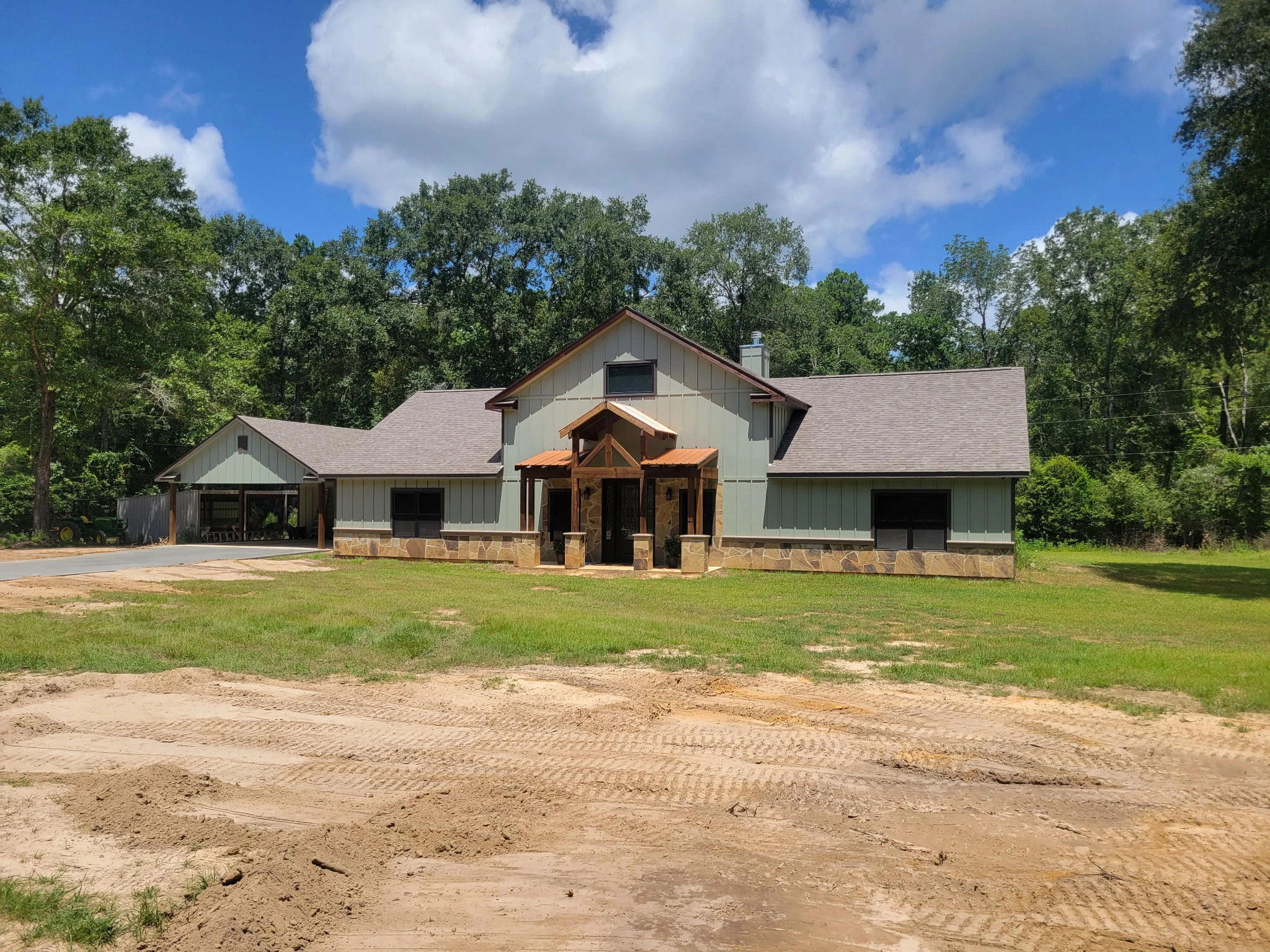
At Dillon Shell Homes, we help Texas property owners plan custom shell homes around the land they already own. If you’ve been looking for experienced rural land shell home builders in East Texas, we’re here to help. Our team can discuss floor plans, site considerations, exterior materials, and the shell construction scope.
Ready to choose the right spot for your shell home? Request a quote today.