
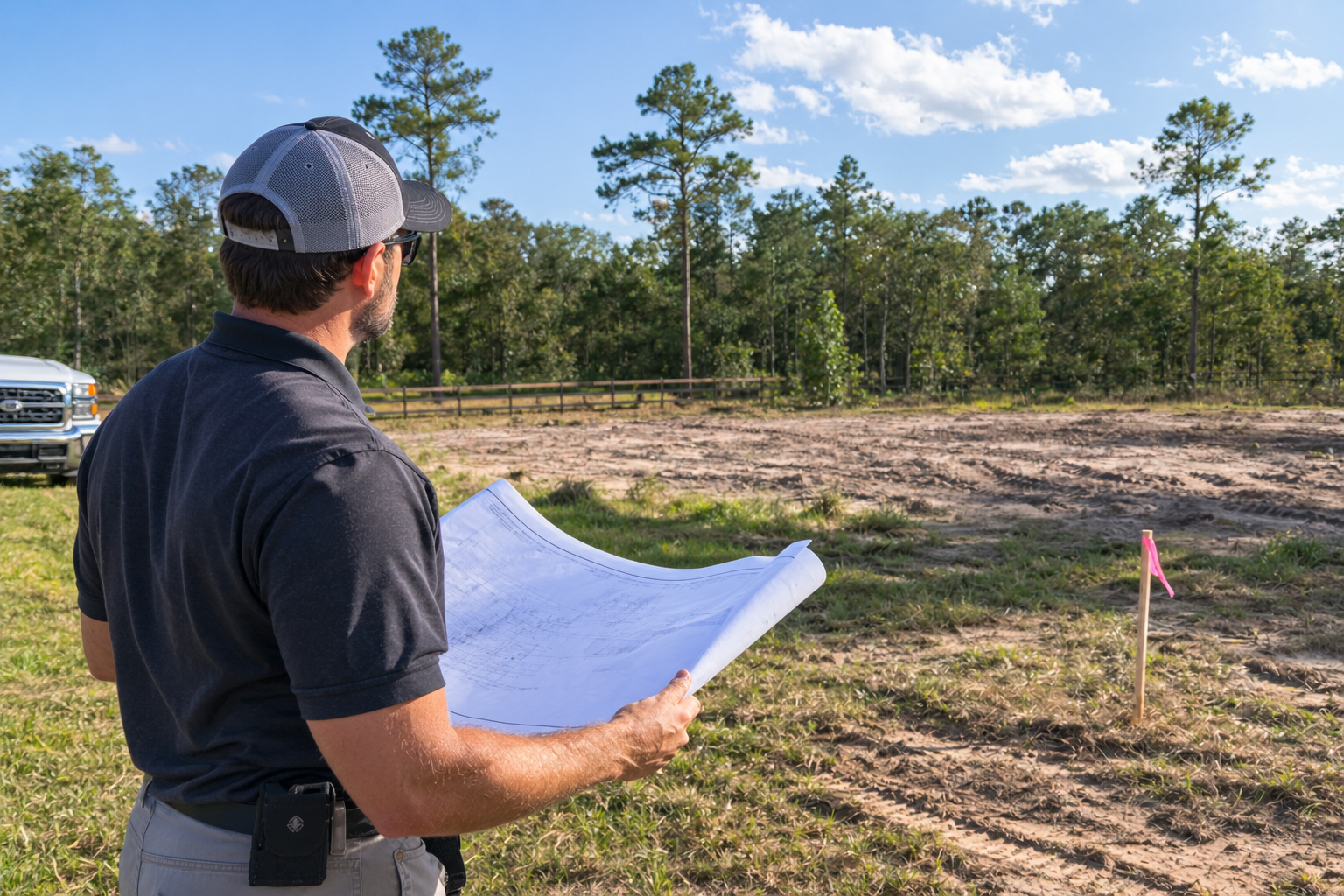
That open stretch of land near Conroe may look ready for a house, but the ground has a few questions of its own. Can a delivery truck reach the homesite? Where will rainwater go? Is there room for a septic system, and will the property need grading before construction can begin?
Answering these questions early can help you plan a shell home with fewer surprises and a clearer understanding of what your property needs.
- Can Construction Vehicles Reach the Homesite?
Check the route from the public road to the proposed building area. Consider driveway width, turning space, ground conditions, culverts, and access for material deliveries. If the property connects to a city street, confirm whether a driveway permit is required.
- Where Will Rainwater Drain?
Look for low spots, standing water, erosion, and natural drainage paths. The City of Conroe’s development guidance identifies drainage, detention, and floodplain issues as important planning considerations. Requirements depend on the property’s location and project scope.
- How Will the Home Get Electricity and Water?
Find out whether electricity is available nearby and whether the property can connect to public water or will need a private well. Utility extensions can affect site layout and project costs, so confirm availability before settling on a homesite.
- Will You Need a Septic System?
If public sewer service is unavailable, an on-site sewage facility may be necessary. Texas generally requires an approved plan and permit for septic system construction, and a site evaluation helps determine which system suits the property. Check requirements with the relevant local authority before proceeding.
- Which Foundation Fits the Property?
Soil conditions, slope, drainage, and the home design can influence whether a slab, pier and beam, or piling foundation is appropriate. Have qualified professionals assess the site rather than choosing a foundation based on price alone.
Recommended: Shell Home Floor Plans
- Are There Restrictions on Where You Can Build?
Check property boundaries, easements, deed restrictions, subdivision rules, setbacks, and any applicable floodplain or permitting requirements. If the land falls within Conroe city limits or its regulatory jurisdiction, confirm which local rules apply to your parcel.
- Where Should the Home Sit on the Land?
Consider sunlight, privacy, views, driveway access, drainage, and the relationship between the house and outdoor areas. The best-looking spot may not be the most practical once utilities, septic, and construction access are considered.
- What Might You Add Later?
Think beyond the first building. You may eventually want a workshop, detached garage, garden, guest space, or additional driveway. Allowing room for future improvements now can help you avoid expensive layout changes later.
Plan Your Conroe-Area Shell Home With Confidence
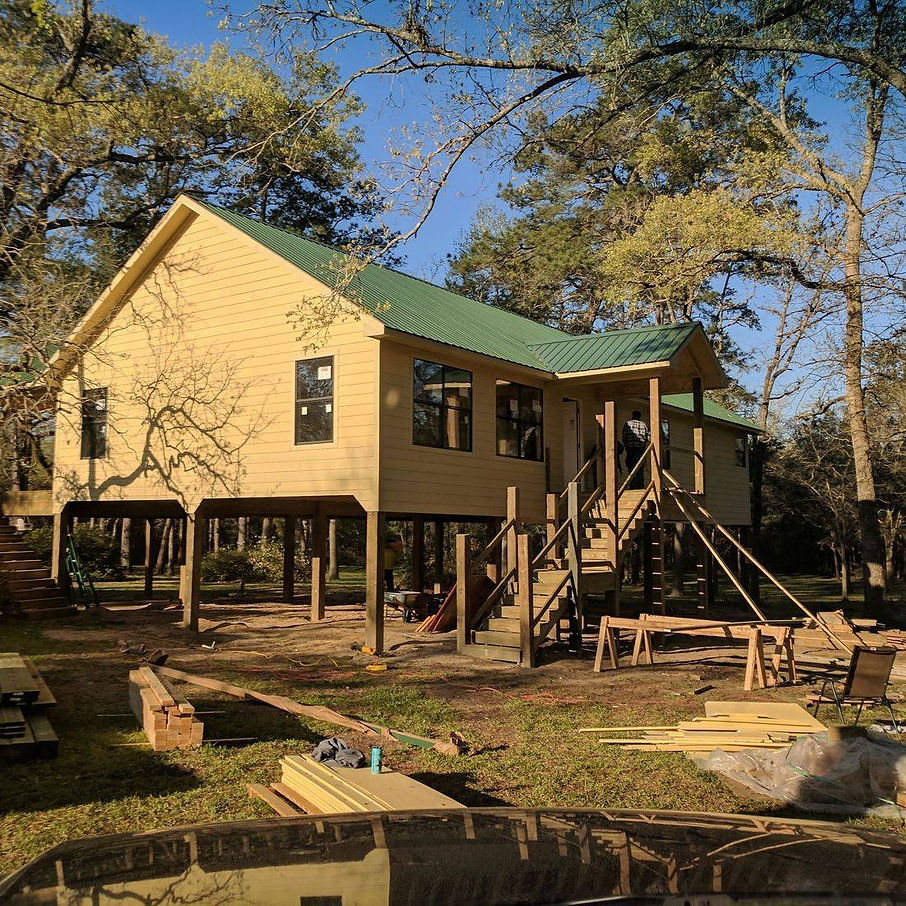
At Dillon Shell Homes, we help property owners plan custom shell homes on land they already own. If you’re interested in custom shell homes built on your land in Conroe, TX, we can discuss floor plans, exterior materials, site considerations, and the shell construction process.
We encourage customers to involve the appropriate site, septic, foundation, utility, and permitting professionals early so the project reflects the actual conditions of the property.
Ready to build on your acreage near Conroe? Request a quote today